

Understanding your golf club fitting data Tulsa is the key to unlocking your true potential on the course. At Tour Quality Golf, we don’t just guess; we prove. With PGA-certified expertise and state-of-the-art TrackMan technology, we provide an objective, data-driven approach to optimizing your equipment. This guide will help you understand the numbers generated during your fitting, empowering you to make informed decisions that directly translate to lower scores and more consistent play.
Why Club Fitting Data Matters
For too long, golfers have relied solely on “feel” when choosing equipment. While feel is a component, it’s subjective and often misleading. Data provides the objective truth, giving you a clear, unbiased picture of how your swing interacts with different clubs.
- Beyond feel: The objective truth about your swing
Your swing data eliminates guesswork. It tells us precisely what’s happening at impact, how much spin you’re generating, your launch conditions, and ultimately, where the ball is going. This empirical evidence is invaluable for diagnosing issues and confirming improvements. - Personalized equipment optimization for peak performance
Every golfer is unique. Your swing speed, attack angle, and club path are distinct to you. Club fitting data allows us to precisely match equipment specifications—from shaft flex to loft and lie—to your unique mechanics, ensuring maximum efficiency and performance. This isn’t about fitting you to a club; it’s about fitting the club to you. - Foundation for truly informed equipment decisions
When you understand the data, you understand *why* a particular club setup performs better for you. This builds confidence in your equipment choices, knowing they are backed by verifiable proof, not just marketing hype or a fleeting good feeling.
Essential TrackMan Metrics to Know
TrackMan is the gold standard in golf launch monitor technology, capturing a vast array of data points with incredible accuracy. Here are the core metrics you’ll encounter and why they matter:
- Ball Speed & Club Head Speed: Understanding power generation
Club Head Speed: This is how fast your club head is traveling at impact. It’s a direct indicator of your potential power. Ball Speed: This is how fast the ball leaves the club face. It’s a result of your club head speed and how efficiently you transferred that energy to the ball (Smash Factor, discussed below). Higher ball speed generally leads to greater distance. - Launch Angle & Spin Rate: Deciphering ball flight characteristics
Launch Angle: The angle at which the ball leaves the club face relative to the ground. An optimal launch angle is crucial for maximizing carry distance, balancing height with forward momentum. Spin Rate: The rate at which the ball spins on its axis immediately after impact. Too much spin can cause the ball to balloon and lose distance, while too little can lead to a knuckleball effect with poor control. Finding the right balance is key to optimal flight and control. - Carry Distance & Total Distance: Evaluating real-world performance
Carry Distance: The distance the ball travels in the air before hitting the ground. This is a critical metric for course management and shot selection, especially when dealing with hazards or target greens. Total Distance: The sum of carry distance and any roll after landing. While roll can be variable depending on course conditions, total distance gives you the full picture of how far your shot travels.

Deciphering Impact & Path Data
Beyond how fast and far the ball goes, TrackMan reveals the intricate details of how your club interacts with the ball and the ground. This “impact data” is where a PGA professional truly shines in diagnosis.
- Club Path & Face Angle: Analyzing strike dynamics and direction
Club Path: The direction the club head is moving at impact relative to the target line (e.g., in-to-out, out-to-in, or neutral). This significantly influences the starting direction of the ball. Face Angle: The direction the club face is pointing at impact relative to the target line. This is the primary determinant of the ball’s initial direction and curvature (draw/fade). Understanding the relationship between Club Path and Face Angle is fundamental to correcting hooks, slices, and pushes. - Attack Angle: How your club interacts with the ball and ground
The vertical angle at which the club head approaches the ball at impact (e.g., descending, ascending, or neutral). A descending attack angle is generally preferred for irons to ensure solid contact and proper turf interaction, while an ascending angle is optimal for drivers to maximize launch and minimize spin. - Smash Factor: Efficiency of energy transfer from club to ball
Calculated by dividing Ball Speed by Club Head Speed, Smash Factor indicates how efficiently energy is transferred from the club to the ball. A higher Smash Factor (closer to the maximum of 1.50 for a driver) means you’re hitting the ball closer to the sweet spot and maximizing your ball speed for a given club head speed. It’s a direct measure of strike quality.

Connecting Data to Equipment Choices
The true power of club fitting data lies in its ability to guide specific equipment adjustments. Your PGA-certified fitter at Tour Quality Golf uses these numbers to prescribe the perfect setup.
- Shaft Flex & Weight: Optimizing launch, spin, and feel
Data on club head speed, tempo, and transition helps determine the ideal shaft flex (e.g., Regular, Stiff, X-Stiff) and weight. The right shaft will promote optimal launch and spin characteristics while providing the best feel for your swing, ensuring stability and consistency. - Loft & Lie Adjustments: Correcting ball flight and turf interaction
Launch angle and spin rate data directly inform loft adjustments. Lie angle, which dictates how the sole of the club sits on the ground at impact, is crucial for consistent turf interaction and preventing shots from veering left or right. TrackMan data and impact tape confirm the necessary adjustments. - Club Head Design: Selecting for forgiveness, workability, or launch
Your impact data (especially strike location and Smash Factor) guides the choice of club head. Are you consistently missing the sweet spot? A more forgiving club head with a higher Moment of Inertia (MOI) might be ideal. Do you need help getting the ball in the air? A club head designed for higher launch could be the answer. Our PGA experts help you navigate these options based on your unique data profile.

The PGA Expert’s Role in Interpretation
While TrackMan provides the numbers, it’s the PGA-certified expert at Tour Quality Golf who brings them to life. Our professionals have years of experience translating complex data into actionable insights for golfers of all skill levels.
- Translating raw TrackMan numbers into actionable advice
We don’t just present you with a spreadsheet of numbers. Our fitters interpret the data in context of your swing, your goals, and your physical capabilities. We explain what each metric means for *your* game and how specific equipment changes will address observed patterns. This educational approach ensures you understand the “why” behind every recommendation. - Identifying patterns and areas for improvement in your swing
Beyond equipment, the data often reveals underlying swing characteristics that could be improved. A consistent out-to-in club path, for example, might indicate a need for a lesson in addition to a club adjustment. Our holistic approach considers both equipment and swing mechanics to unlock your full potential. Learn more about our PGA golf lessons. - Ensuring holistic equipment synergy tailored to your game
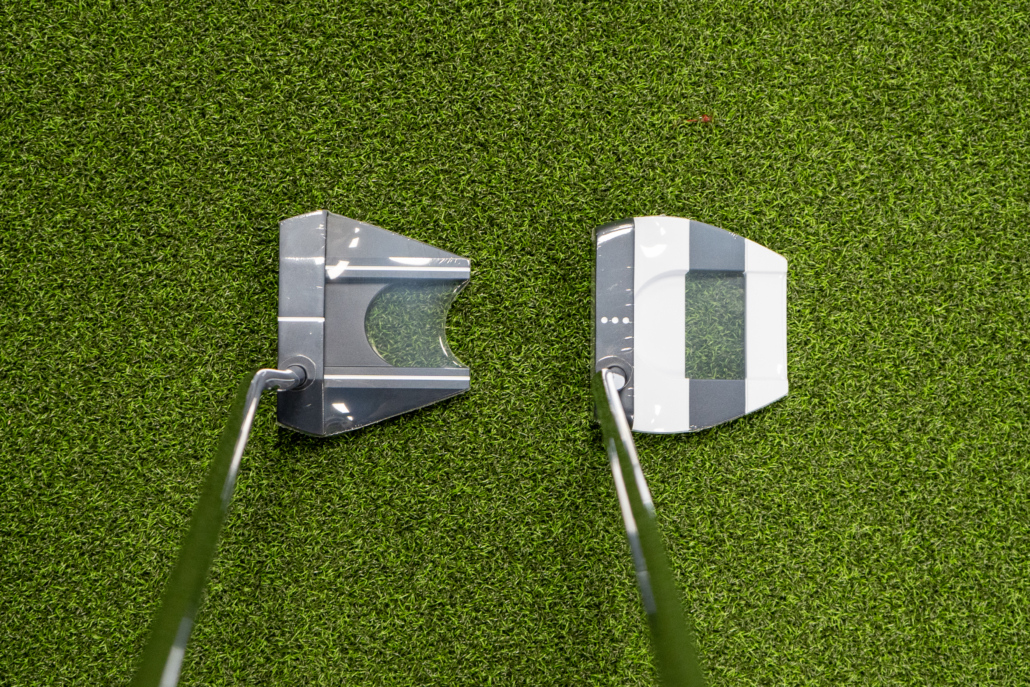
A club fitting isn’t about finding one perfect club; it’s about building a cohesive set that works together seamlessly. Our experts ensure that your driver, irons, wedges, and putter are all optimized to complement each other and your unique swing, providing a consistent feel and predictable performance across your entire bag.
Making Data-Driven Equipment Decisions in Tulsa
Armed with a clear understanding of your TrackMan data and the expert interpretation from Tour Quality Golf, you’re ready to make truly informed equipment decisions for your game here in Tulsa.
- Prioritizing metrics that align with your specific game goals
Are you looking for more distance, better accuracy, or improved consistency? Your specific goals will help prioritize which metrics are most critical to optimize. For instance, a golfer struggling with distance might focus on maximizing ball speed and optimal launch/spin, while someone battling hooks might prioritize club path and face angle corrections. - Comparing equipment options with objective, verifiable evidence
During your fitting, you’ll hit various club heads and shafts. The TrackMan data provides an objective comparison of each option’s performance, eliminating subjective bias. You’ll see, in real numbers, which setup delivers the best launch, spin, distance, and dispersion for *your* swing. - Gaining confidence in your new setup, proven by the numbers
The ultimate benefit of a data-driven fitting is the confidence it instills. Knowing that your clubs are precisely matched to your swing, and that this has been proven by verifiable data, allows you to step onto the course with a new level of assurance and trust in your equipment. This confidence translates directly to better play.
Don’t leave your golf game to chance or guesswork. Experience the precision and expertise of a Tour Quality Golf club fitting. Our PGA-certified professionals, backed by industry-leading TrackMan technology, are ready to help you unlock your best golf.
Visit our facility in Tulsa, Oklahoma, and take the first step towards truly understanding your game and optimizing your equipment for peak performance. Your best golf starts here.

