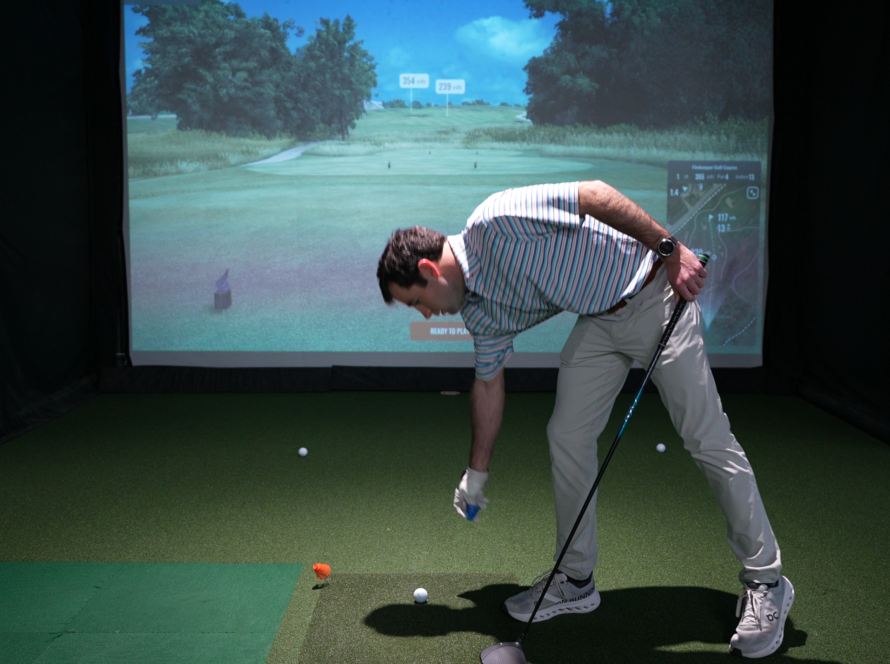
The landscape of golf club fitting Tulsa has undergone a profound transformation, evolving from rudimentary guesses to highly sophisticated, data-driven science. For decades, golfers chased elusive improvements with off-the-rack clubs, often unaware of the direct correlation between properly fitted equipment and enhanced performance. At Tour Quality Golf, we understand this journey intimately, leveraging PGA-certified expertise and cutting-edge TrackMan technology to deliver the most precise fitting experience in Tulsa.

From Static to Dynamic: The Early Days of Club Fitting
In the nascent stages of golf club fitting, the process was largely static and based on generalized physical attributes. Golfers would visit their local pro shop, and fittings were often a quick, subjective affair with limited options.
- Reliance on basic measurements like height and wrist-to-floor. Fitters would take simple measurements, assuming a direct correlation between a golfer’s height and their ideal club length. Wrist-to-floor measurements offered a slightly more refined, yet still superficial, approach to shaft length and lie angle. These methods provided a starting point but often missed the nuances of an individual’s swing mechanics.
- Limited adjustability for loft, lie, and shaft flex. Club manufacturers offered very few options for customization. Loft and lie angles were largely fixed, requiring expensive and often irreversible bending processes if adjustments were needed. Shaft flex was typically categorized into broad segments like “regular” or “stiff,” with little consideration for swing speed or transition.
- Trial and error as the primary method for club selection. Without precise data, golfers and fitters relied heavily on hitting balls and subjectively evaluating the feel and perceived flight. This method was inefficient, inconsistent, and often led to equipment that wasn’t truly optimized for the player’s unique swing characteristics. It was a frustrating guessing game for both parties.
The Rise of Early Technology: Understanding Ball Flight
The turn of the millennium brought the first significant technological advancements to the fitting bay, moving the industry away from pure guesswork and towards a more observational, data-informed approach.
- Introduction of basic launch monitors for initial data capture. Early launch monitors, though primitive by today’s standards, represented a monumental leap forward. These devices could measure fundamental metrics like ball speed and launch angle, providing the first objective data points to guide club selection. This allowed fitters to move beyond subjective feel and start correlating club specifications with tangible outcomes.
- Shift towards observing ball flight and player swing characteristics. With basic data in hand, fitters began to understand how different club setups influenced ball flight. They could observe tendencies like hooks, slices, and trajectories, and then make more informed recommendations for loft, lie, and even initial shaft choices based on these visual cues combined with the new data.
- Recognition of the direct impact of club specifications on performance. This era solidified the understanding that club specifications were not merely preferences but critical variables directly impacting a golfer’s ability to hit the ball consistently and effectively. It laid the groundwork for the scientific approach we embrace today.

The Digital Revolution: Precision with Launch Monitors
The true revolution in club fitting began with the advent of advanced launch monitor technology, epitomized by systems like TrackMan. This marked a paradigm shift, transforming fitting from an art into an exact science.
- Emergence of advanced devices like TrackMan for comprehensive data. TrackMan, a Doppler radar-based system, changed everything. It provided an unprecedented level of detail, capturing not just ball flight data but also intricate club data throughout the swing. This meant fitters could finally understand the ‘why’ behind the ball flight, not just the ‘what’.
- Measurement of critical metrics: club path, face angle, spin rates, ball speed. With TrackMan, we gained access to a wealth of metrics previously unimaginable. Club path, face angle, angle of attack, dynamic loft, spin rates (backspin, sidespin), ball speed, and carry distance became standard measurements. These metrics allowed for a granular analysis of how the club was interacting with the ball and the golfer’s swing.
- Ability to make data-driven decisions for optimal club configuration. Armed with this precise data, PGA-certified fitters could make highly informed decisions. Every adjustment to loft, lie, shaft weight, flex, or head design could be immediately quantified and its impact on performance understood. This eliminated guesswork and ensured that every club configuration was optimized for maximum efficiency and consistency for the individual golfer.
Materials Science and Manufacturing Advancements
Hand-in-hand with technological advancements in data capture, the materials and manufacturing processes for golf clubs themselves underwent a dramatic evolution, providing fitters with an expanding toolkit for customization.
- Development of innovative clubhead materials (titanium, carbon fiber). The introduction of lightweight yet strong materials like titanium for driver faces and carbon fiber for crowns revolutionized clubhead design. These materials allowed engineers to push the boundaries of weight distribution, create larger sweet spots, and increase ball speed, offering fitters more options to optimize launch conditions.
- Introduction of adjustable clubs with interchangeable weights and hosels. Perhaps the most significant advancement for fitting was the widespread adoption of adjustable clubs. Drivers, fairways, and hybrids now feature adjustable hosels to change loft and lie, and interchangeable weights to alter spin and bias. This innovation allows fitters to fine-tune clubs in real-time during a session, without the need for multiple heads or shafts.
- Expanding possibilities for customization beyond traditional limits. These material and manufacturing breakthroughs meant that customization was no longer limited to basic length and lie adjustments. Fitters could now manipulate launch, spin, and shot shape to an unprecedented degree, truly tailoring equipment to match a golfer’s specific swing characteristics and desired ball flight.
Modern Club Fitting in Tulsa: The Tour Quality Golf Difference
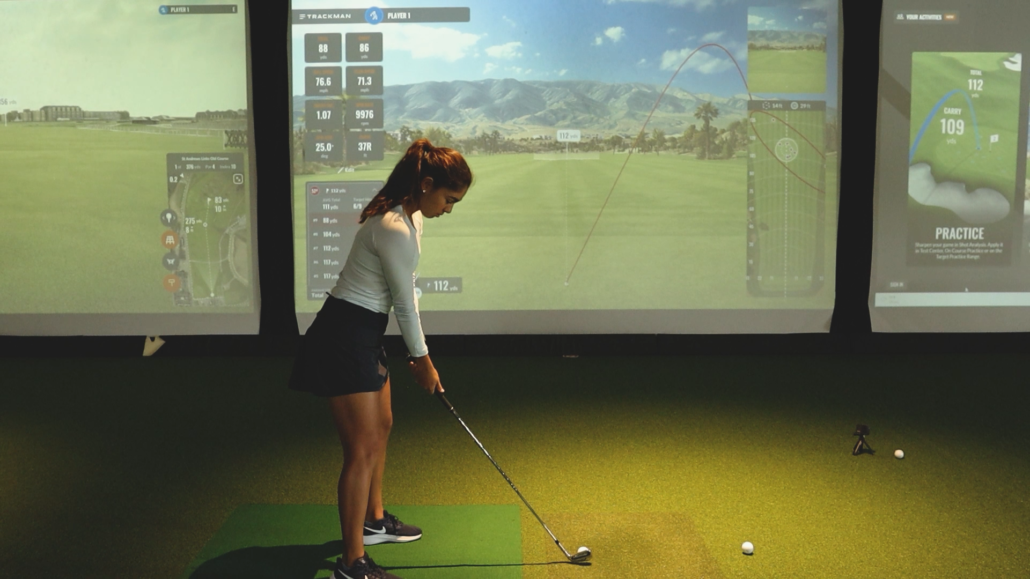
Today, the pinnacle of club fitting combines the best of technology with human expertise. In Tulsa, Tour Quality Golf stands at the forefront of this modern approach, setting the standard for personalized equipment optimization.
- Leveraging PGA-certified expertise combined with TrackMan technology. At Tour Quality Golf, our PGA-certified instructors bring years of experience and a deep understanding of the golf swing to every fitting session. This human expertise is then amplified by the unparalleled precision of TrackMan technology. It’s not just about collecting data; it’s about interpreting it through the lens of professional coaching to make truly informed decisions.
- Personalized fitting sessions for every golfer’s unique swing. We recognize that no two swings are exactly alike. Our approach to golf club fitting Tulsa is entirely personalized, focusing on your individual swing DNA, physical capabilities, and performance goals. We don’t just fit clubs; we fit them to *you*.
- Ensuring maximum performance and consistency on the course. The ultimate goal of a Tour Quality Golf fitting is to equip you with clubs that not only feel great but consistently perform under pressure. By optimizing every aspect of your equipment – from shaft flex and weight to loft, lie, and grip size – we help you achieve greater distance, tighter dispersion, and more consistent results, transforming your game from the ground up.
The Future of Club Fitting: AI and Continuous Innovation
The evolution of club fitting is an ongoing journey. As technology continues to advance, we anticipate even more sophisticated methods emerging, further refining the pursuit of the perfect club-player connection.
- Integration of artificial intelligence and machine learning for predictive analysis. Future fitting sessions may incorporate AI and machine learning algorithms to analyze vast datasets of swing characteristics and club performance. This could lead to predictive analytics that recommend optimal club configurations even before a single ball is struck, based on a golfer’s initial swing metrics.
- Further refinement of personalized recommendations based on vast data sets. As more data is collected globally, AI can identify subtle patterns and correlations that human fitters might miss. This could lead to hyper-personalized recommendations, taking into account not just current swing data but also historical performance, physical limitations, and even environmental factors.
- The ongoing pursuit of the perfect club-player synergy. Regardless of how advanced technology becomes, the core objective remains the same: to achieve the ideal synergy between a golfer and their equipment. The future promises even greater precision, efficiency, and customization, ensuring that every golfer has the opportunity to unlock their full potential.

From the rudimentary measurements of yesteryear to the intricate data analysis powered by TrackMan today, golf club fitting has journeyed far. At Tour Quality Golf in Tulsa, we embody this evolution, offering an unparalleled fitting experience that combines PGA expertise with state-of-the-art technology. Don’t leave your game to chance. Discover the difference a truly custom-fitted set of clubs can make for your performance and enjoyment on the course.